D
Communications-center dispatch
Position control, call responsibility, Comms+, Ops, Supervisor, training, analytics/QA, incident chronology, structured messaging, resource requests, unit control and operational oversight.
AXIOS brings dispatch, officers, records, Fire/EMS, civilian services, administration, Discord and FiveM into one community platform so your staff spend less time working around the CAD and more time using it.
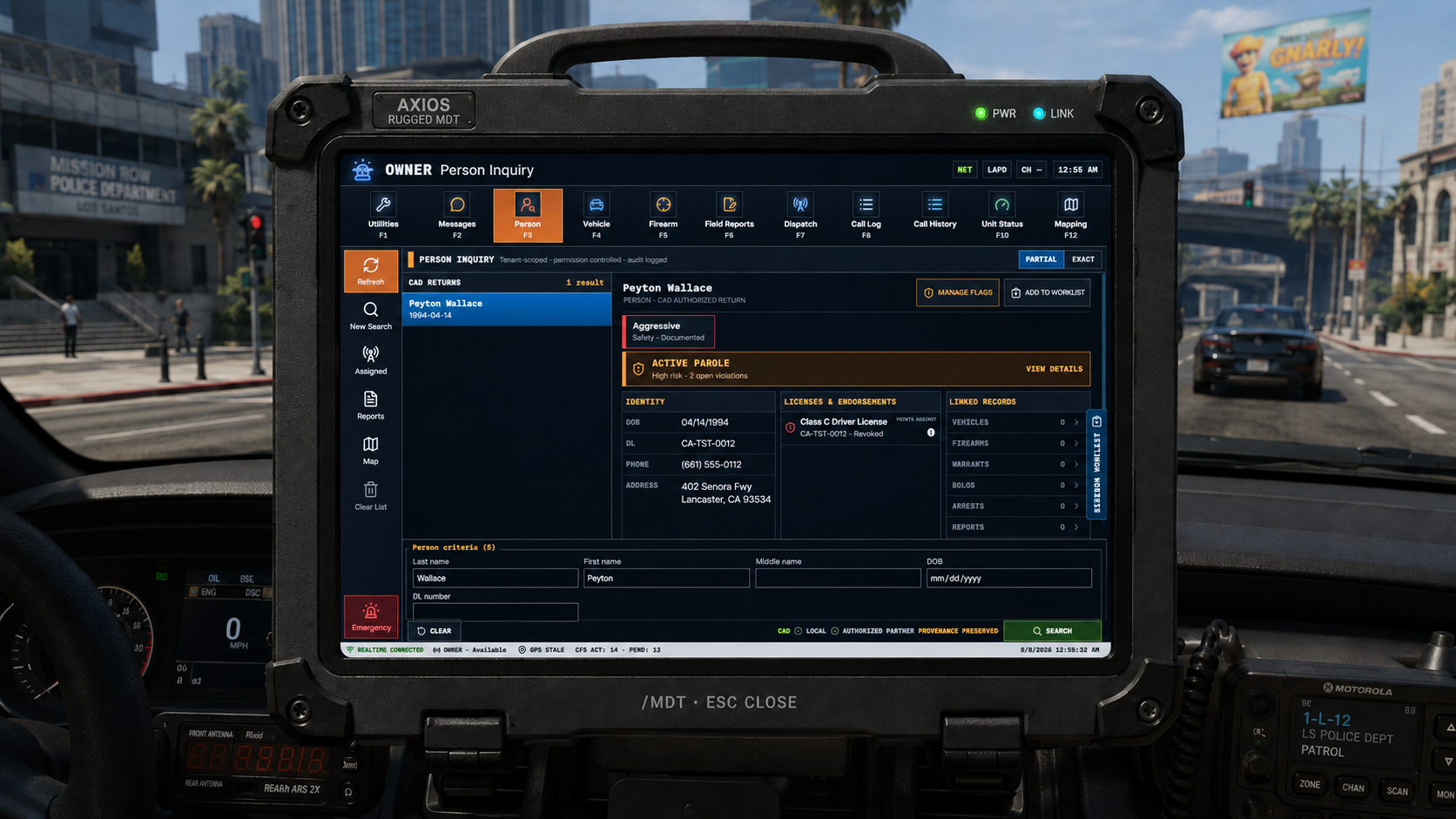
AXIOS is built so the work does not disappear when someone changes screens. A call can lead to an inquiry, the inquiry can lead to a record, and the record can remain useful to the next authorized person who needs it.
Position control, call responsibility, Comms+, Ops, Supervisor, training, analytics/QA, incident chronology, structured messaging, resource requests, unit control and operational oversight.
Assigned Calls, Call Log, Call History, Person, Vehicle and Firearm inquiry, Field Reports, citations, Unit Status and Mapping in a rugged field workspace.
Contacts, reports, arrests, citations, warrants, licensing, ownership and legal outcomes can remain connected so staff can understand what happened instead of piecing it together later.
Apparatus and resource assignments, incident command, staging, mutual aid, accountability, transport status, destination and operational forms—without turning AXIOS into an ePCR.
Create permission groups for department heads, command staff, developers and administrators while keeping protected owner controls separate.
FiveM and Discord integrations can connect calls, units, access, notifications and other community workflows instead of forcing everything to live in separate systems.
The value is not simply that every module exists. It is that each authorized step can contribute to the same operational history and future context.
A call enters the communications operation, receives priority and responsibility, and begins an attributable incident chronology.
Assigned officers see the incident in the MDT, update status, review notes and keep their assigned workload separate from the broader open-call log.
Person, vehicle and firearm returns can expose authorized warrants, supervision, licensing, flags, ownership and linked-record context with provenance.
Reports, citations, arrests, Field Interviews and configured forms preserve the event instead of disappearing when the shift ends.
Configured supervisor or Judicial workflows can approve, return, sign or record authoritative outcomes without treating allegation and conviction as the same thing.
A later inquiry can explain the status that exists now and preserve the record that created it.
Optional systems can add deeper workflows when enabled, but the rest of the CAD should still have a clear path when a module is turned off.
A vehicle can change owners. An arrest can remain historical without becoming a false conviction. A license can be suspended or restored while the reason and history remain visible to authorized users.
Departments, ranks, callsigns, laws, statuses, licensing, forms, approval rules, integrations and access can be configured around how your community actually operates.
Patrol-focused inquiry, call handling, reports, contact history, warnings, citations, arrests, warrants and operational context.
Comms+, Ops, Supervisor, queue control, training, analytics/QA, position management, chronology, responder safety and command oversight.
Dedicated response operations with discipline-specific workflows rather than a renamed police MDT.
Warrant and legal-review workflows that preserve the distinction between arrest, charge, disposition and conviction.
Characters, property context, vehicles, firearms, ownership, licensing and community-facing services tied to persistent identity.
Advanced governance, delegated administration, custom workflows, Data Management, Discord and FiveM configuration.
You should not have to choose between a powerful CAD and one your staff can actually operate. AXIOS is being built around practical ownership problems: training people safely, delegating access, keeping records accurate and connecting the server systems you already use.
Different roles get purpose-built workspaces while sharing the same community history, reducing the amount of information staff have to re-enter or explain.
Give trusted staff only the management tools they need instead of turning everyone into a full administrator.
Add optional modules, integrations and workflows as your community matures without rebuilding the CAD around a new architecture.